On June 23, the European Commission launched the Connectivity Agenda Platform and concluded agreements with international financial institutions expected to mobilise up to €2 billion for strategic connectivity investments in the Black Sea region and the South Caucasus, the Delegation of the European Union to the Republic of Kazakhstan reported.
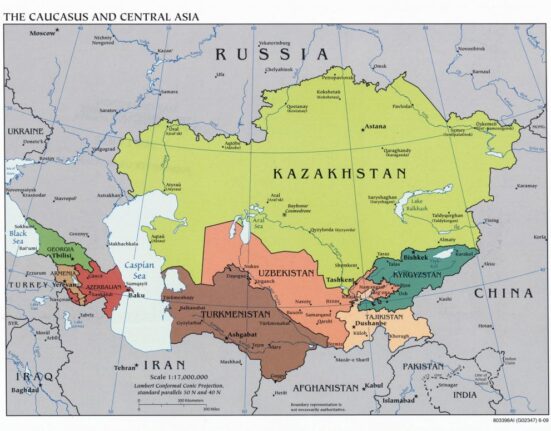
The Platform was unveiled at a high-level ministerial meeting hosted by Commissioner for Enlargement Marta Kos, Commissioner for International Partnerships Jozef Síkela, and Commissioner for Sustainable Transport Apostolos Tzitzikostas. The meeting brought together ministers of transport and senior representatives from EU Member States, Armenia, Kazakhstan, the Kyrgyz Republic, the Republic of Moldova, Tajikistan, Turkmenistan, Türkiye, Ukraine and Uzbekistan, alongside representatives of the G7 and international financial institutions, to advance the Cross-regional Connectivity Agenda under the Global Gateway strategy.
The Connectivity Agenda Platform will provide a framework for participating countries, international financial institutions and other stakeholders to coordinate investments and policy action across transport, energy, digital connectivity and trade sectors. To further strengthen the cooperation with the region, the participants also agreed to strengthen the Trans-Caspian Transport Corridor’s operational performance.
To support the implementation of the Connectivity Agenda, the Commission has concluded statements of intent with international financial institutions expected to mobilise up to €2 billion for investments in transport infrastructure, border crossing points and trade facilitation across the Black Sea region and the South Caucasus. These investments will help improve cross-border connections and facilitate trade along the corridor.
“The Trans-Caspian Transport Corridor is becoming a vital bridge between Europe and Asia. With these new investment agreements, we are upgrading infrastructure, improving border crossings and helping create a route that is quicker, more reliable and better connected. This is not only about transport. It is about competitiveness, energy security and giving citizens and companies the confidence that trade and mobility can continue even in times of geopolitical pressure,” said Jozef Síkela, Commissioner for International Partnerships.