In recent years, the international film industry has increasingly talked about diversity, cultural multiplicity, and the need for new voices. However, in reality, the global screen remains quite hierarchical: some countries are automatically considered “providers of great cinema,” while others are still relegated to the cultural periphery.
When Western audiences hear about films from Central Asia, the Caucasus, or the post-Soviet space, the reaction is often predictable: “local exotica,” “niche festival cinema,” “regional agenda.” In recent years, the label of “political statement” has been added to this set of labels, detrimentally impacting the artistic aspect. These formulations conceal an old cultural stereotype—that cinema from so-called “third-world countries” exists somewhere outside the global artistic process. Such films are often expected to feature either political commentary, or depict poverty, trauma, and cultural distance.
Interestingly, independent venues in the UK, Canada, and the US have begun to change this approach faster than major institutions in recent years. This seems especially paradoxical now, when the global film industry publicly talks about cultural diversity, yet real films from many regions of the world remain virtually invisible to Western audiences.
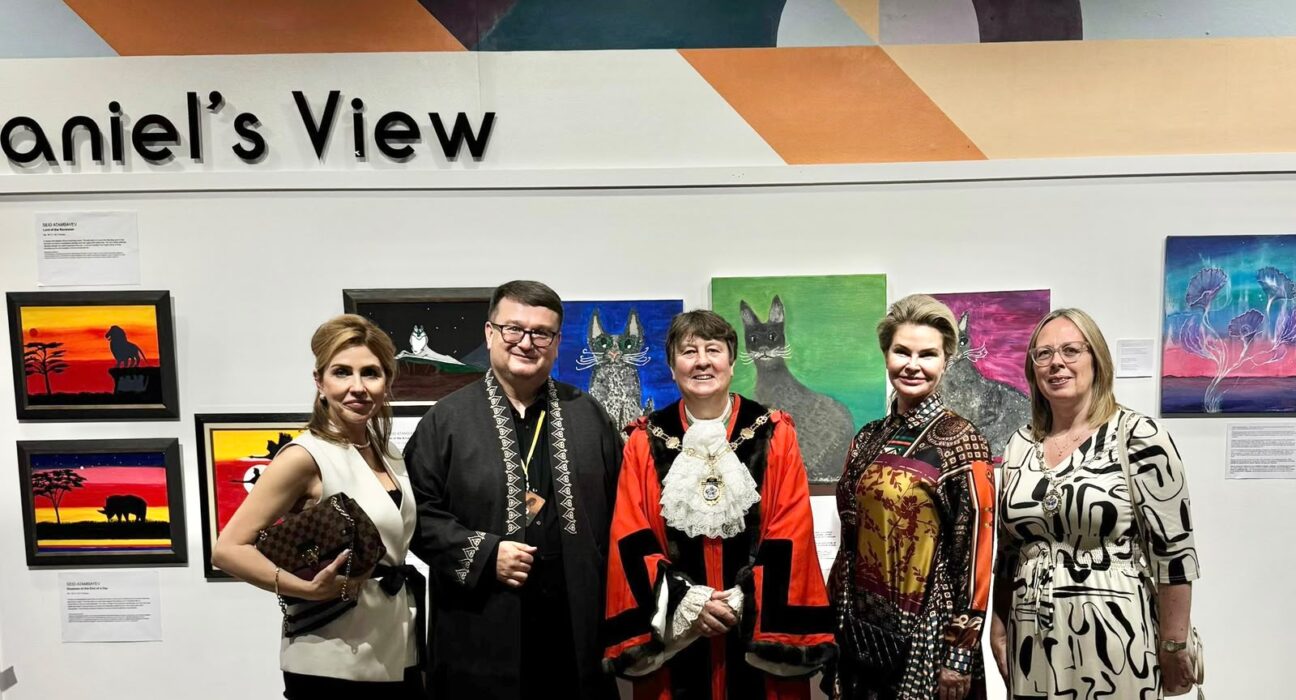
A recent example: the ninth ECG Eurasian Film Festival has just concluded in London. For its first few seasons, it was held as the “international section” of the Romford Film Festival and as an attempt to bring films that almost never make it to European distribution to British audiences. In 2021, the festival received IMDB accreditation and became the first film festival to be held offline after the pandemic.
Does it attract hundreds of viewers? Of course not, because stereotypical perceptions don’t change overnight, and even industry giants require decades and billions of dollars to instill new habits in a mass audience. However, something else is being tested through such “public initiatives.” Initially, such events attract audiences deeply involved in the world of cinema and, in a sense, shaping its future. And the opportunity to develop taste and familiarity through diverse material and lively dialogue with filmmakers is precisely what combats stereotypes.
Another telling detail is that the ECG Eurasian Film Festival 2026 program featured a diverse range of themes. The clear winner was Ibrahim Amini’s “K-Poper,” about an Iranian teenage girl who falls in love with a popular Korean K-pop singer and dreams of traveling to Seoul to see him and participate in a competition against her mother’s wishes. The top prize in the Animation category went to Swiss photographer Bellopropello for his cartoon about how smartphones are changing people’s habits. The best documentary film was awarded to Russian director Vladimir Sumashedov’s work about an artist who used his art to stop the bloodshed of World War II. The best book trailer (a genre quite unusual for a general audience) was for Armenian writer Elena Aslanyan’s book “The Gold of the Aryans.”
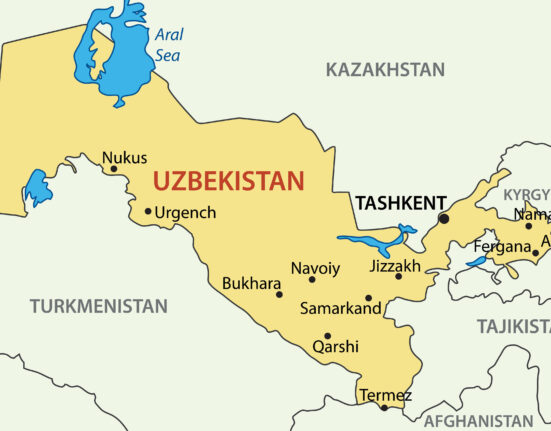
The Uzbek film “Batyr Zakirov & Frank Sinatra: The Meeting That Could Have Happened…” by Boris Babayev, which won the Audience Choice Award, tells the story of the impossible meeting of two musical worlds – the Soviet East and American pop.
The Kazakh film “Children’s, the Seeds of the Future” by Saule Rysbaeva explores the theme of a humanitarian future through the story of children, while the Uzbek animation project “Legends of the Great Silk Road” by Gulchekhra-begim Makhmudova addresses the cultural heritage of the Silk Road without attempting to adapt its own identity to Western demands. The festival also featured a film about the development of fashion in independent Uzbekistan, “A New Look: Uzbek Fashion Post-Independence,” directed by the young British director Dan Akhm. And this, perhaps, is the festival’s most important result: viewers begin to see not just a “distant region,” but universal human stories.
The specific awards these films received aren’t even important. Something else is far more telling: perhaps this is where the true watershed in contemporary cultural policy lies. Not between East and West, not between the “center” and the “periphery,” but between the old view of global art and a new one, where the right to complexity, quality, and international conversation is no longer determined by geography.
And if just ten years ago, films from Eurasia had to first explain why they deserved attention, today another question increasingly arises: why did the global industry pretend to ignore them for so long?
Facebook: https://www.facebook.com/groups/ECGFilmFestival
Telegram: https://t.me/+WYjMv6-H1SwxOWNi
Instagram: https://www.instagram.com/eurasianfilmfest/
FilmFreeway: https://filmfreeway.com/ECGFilmFestival