The delegation of Uzbekistan, headed by Adviser to the President on Environmental Issues and Chairman of the National Committee on Ecology and Climate Change Aziz Abdukhakimov, participated in the 21st session of the United Nations Forum on Forests held in New York City, the National Committee reported.
The forum brought together delegations from UN Member States, ministers, heads of relevant agencies and international organizations, as well as executive secretaries of environmental conventions. Discussions focused on key priorities of global forest policy, including the implementation of the United Nations Strategic Plan for Forests, preparations for the Global Forest Report 2026 and the integration of the forest sector into the climate and water agenda.
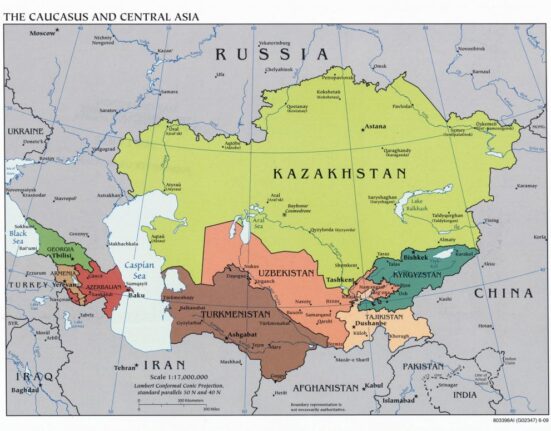
Speaking at the opening session, Abdukhakimov emphasized the critical role of forests in combating desertification and climate change, with particular reference to the tragedy of the Aral Sea, whose dried seabed has transformed into the Aralkum Desert. It was noted that, at the initiative of the President of Uzbekistan Shavkat Mirziyoyev, more than one billion trees have been planted nationwide over the past five years under the nationwide “Yashil Makon” initiative, while the country’s green coverage has increased from 8 to 14 percent. Uzbekistan aims to raise this figure to 30 percent by 2030.
Special attention at the forum was devoted to the joint initiative of Uzbekistan and the Republic of the Congo to declare 2027–2036 the “Decade of Action for Afforestation and Reforestation” under the auspices of the United Nations. Proposed practical measures included the development of a Global Roadmap on Afforestation, the expansion of international cooperation in combating desertification, the promotion of drought-resistant plant species and the establishment of early warning systems for dust and sand storms.
In addition, the regional “Green Shield” initiative of the Central Asian countries was presented. The initiative envisages the creation of transboundary forests covering 1.5 million hectares by 2035.