
On July 22, President Shavkat Mirziyoyev officially launched construction of the new Tashkent–Samarkand highway.
The president emphasized the project’s importance for strengthening the transport and logistics potential of New Uzbekistan.
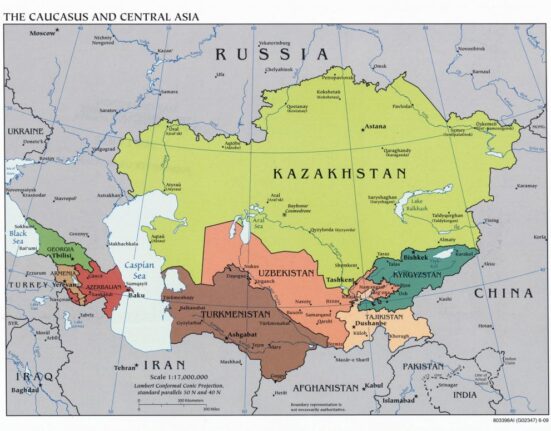
Once the China-Kyrgyzstan-Uzbekistan railway and the Trans-Afghan railway are commissioned, Uzbekistan will become a key link in the shortest overland corridor connecting the Pacific Ocean and Europe.
According to estimates, handling an additional 15-20 million tons of transit cargo annually will generate $400-$600 million in revenue, attract $3 billion in investment for the development of logistics centres and terminals, and create 50,000 permanent jobs in Uzbekistan.
To this end, by 2030, it is planned to transform 4,000 kilometers of international roads connecting Andijan with Kungrad and Termez with Tashkent into modern transit corridors meeting high standards. The new Tashkent–Samarkand highway will be an important part of this strategic program.
The six-lane highway, spanning 282 kilometers, will cost about 2.2 billion dollars. It will pass through 13 districts in the Tashkent, Syrdarya, Jizzakh, and Samarkand regions, where more than 2 million people live, creating new opportunities for the development of these areas.
As part of the project, 92 bridges, 28 overpasses, 60 tunnel-type crossings, as well as underpasses and culverts for agricultural use, will be built.
The highway will feature a durable monolithic concrete pavement designed to withstand heavy, high-speed traffic. On straight sections, vehicles will be able to travel at speeds of up to 150 kilometers per hour.
“Once the project is completed, every one of our compatriots will certainly feel the benefits of the new road. Travel time from Tashkent to Samarkand will be reduced from the current five hours to two and a half hours,” the Head of State noted.
The new highway will have a capacity of 60,000 to 80,000 vehicles per day.
The new highway will become an important link connecting the Fergana Valley and the central regions of the country with its southern and western regions. It will also enhance the efficiency of international transport corridors and strengthen Uzbekistan’s position as Central Asia’s transport and logistics hub.
The highway is scheduled to be commissioned in 2030.
Photo: president.uz