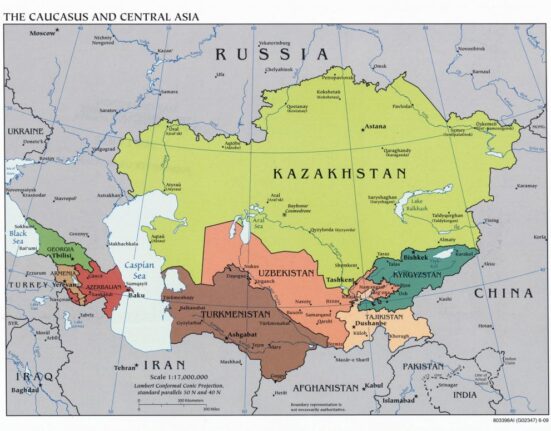
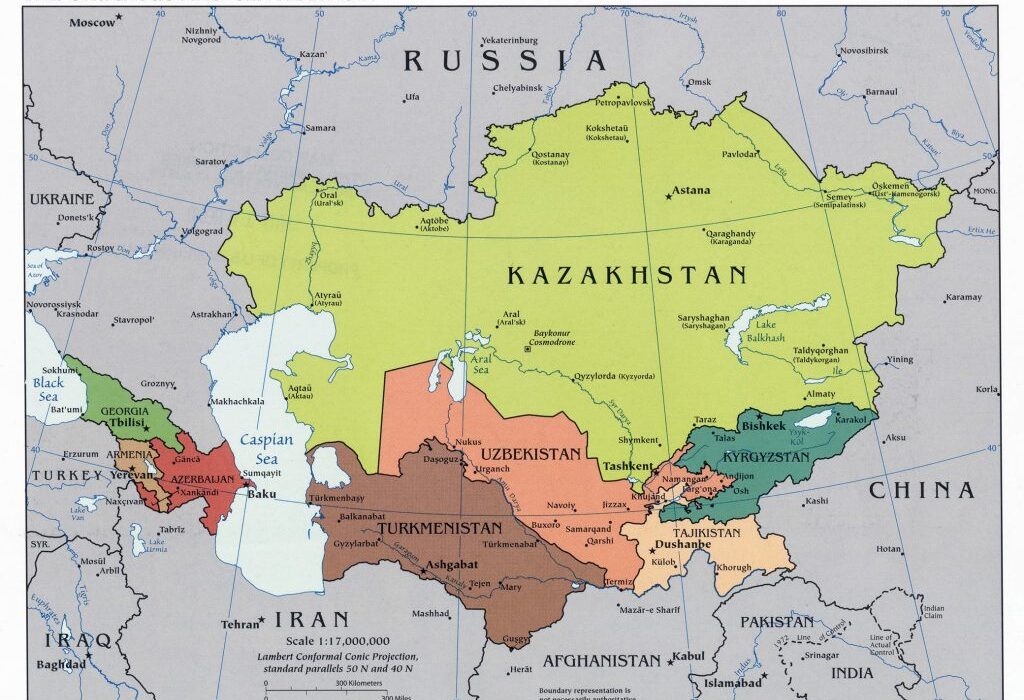
The ongoing military operation of the United States and Israel against Iran impacts international security, energy markets, and trade routes. Orda.kz gathered opinions from Kazakhstani analysts on possible scenarios and implications of the conflict for Central Asia and Kazakhstan.
Political analyst Askar Nursha believes that the main impact of the conflict on the countries of Central Asia will be economic. Further escalation could affect supply chains, the transport corridor from Central Asia to the South Caucasus, and beyond.
It is not in our interests for the conflict to drag on, says Nursha, because Iran might potentially target American economic and oil facilities, including in Kazakhstan. Iran may also count on Russian support in the form of food and other supplies, the analyst noted, referring to possible military aid. In this case, he warns, there is a risk that the Caspian Sea will become the target of missile strikes by American and Israeli aircraft. This threatens to temporarily disrupt trans-Caspian exports, the Middle Corridor, and Kazakh oil supplies to Baku and Makhachkala. “Under such conditions, Kazakhstan’s dependence on exports through Russian and Chinese territory will increase. Considering the overall situation in Eurasia and Russia’s conflicts, this will effectively mean a strengthening of China’s position in the region,” Nursha concluded.
He recalled that countries in the Central Asian region have been actively promoting a southern trade corridor through Afghanistan and Iran.
“If the conflict continues, and Afghanistan is drawn into its orbit, then for some time we will have to forget about railway construction projects through Afghanistan and plans for exports through Iranian infrastructure. This is not very good for us.”
At the same time, Nursha allows for a more positive long-term scenario.
“If people come to power in Iran who believe that conflict with the US is unprofitable, if this new government is less religious and moves toward greater secularism, then we have a chance of lifting US sanctions against Iran.”
It is precisely these sanctions that have hindered the region’s trade with Iran over the past decades, said Nursha. “Due to US sanctions, Central Asian trade with Iran has not reached its potential; it has been very limited for the past 30 years. If relations between Iran and the US ultimately improve, we will benefit—as all trade routes through Iran will open.”
Another political analyst, Dosym Satpayev, also notes that long-term destabilization in Iran could create serious challenges for Kazakhstan: “Blocking the North-South corridor threatens transport and logistics routes and could negate the country’s long-standing efforts to access Persian Gulf ports.”
Satpayev emphasizes the geopolitical risks in the Caspian Sea region, particularly if tensions escalate between Iran and Azerbaijan. Ethnic Azerbaijanis who live in northwestern Iran number 25-35 million. Any significant destabilization could cause humanitarian and social consequences, migration flows, and increased interethnic conflict.
In the short term, the expert believes, Kazakhstan could benefit from disruptions in Iranian oil supplies. Problems with Iranian oil supplies to the Chinese market could increase Kazakhstan’s attractiveness as an oil supplier to China.
“The Atasu-Alashankou pipeline, which leads to China’s Xinjiang region, has a capacity of approximately 10 million tons per year, but is not being used at full capacity. In 2025, only one million tons of Kazakh oil were exported through it to China. Incidentally, at the end of last year, due to the reduction in export capacity of the Caspian Pipeline Consortium following the Ukrainian drone attacks, 50,000 tons of oil from the Kashagan field were sent through the Atasu-Alashankou pipeline for the first time,” Satpayev explained.
However, the analyst warns that the effect of rising oil prices could be short-lived. “If Venezuelan oil exports increase in 2026, or the situation in Iran stabilizes and sanctions are lifted, prices could fall. This would be extremely disadvantageous for Kazakhstan.”
At the same time, Satpayev notes that stability and the lifting of sanctions on Iran would open up new opportunities. A rapid stabilization of the situation opens up more economic opportunities for Kazakhstan. These include the use of the Kazakhstan-Iran-Turkmenistan transport and logistics route and Iranian ports, as well as access to the Iranian market for Kazakh products.