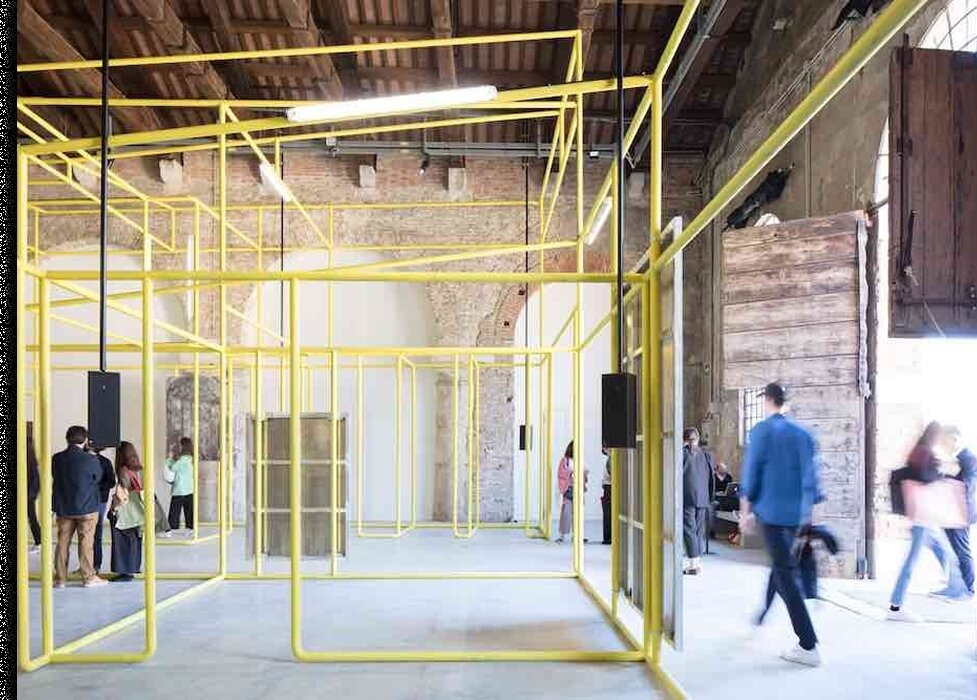
The 2026 Venice Biennale exposed an uncomfortable truth once again: Central Asia is increasingly becoming a beautiful exotic backdrop for the Western art world rather than an equal intellectual voice within it.
Uzbekistan is now investing heavily in building its cultural brand. The pavilions are more polished, visually stronger, conceptually cleaner. The Aral Sea, memory, silence, trauma, the Silk Road, Soviet modernism – everything fits perfectly into what European curators expect to see.
Too perfectly.
It feels as if Venice wants Uzbekistan to appear exactly this way:
slightly mysterious,
slightly tragic,
aesthetically melancholic,
beautifully wounded.
And Uzbekistan is beginning to sell precisely that image.
The problem is that real contemporary art is not supposed to be comfortable. It should ask uncomfortable questions. But where are those questions in these pavilions? Where is the conversation about today’s society? About fear, censorship, inequality, migration, identity crises, or a generation growing up between TikTok, religion, globalisation and authoritarian realities?
Mostly absent.
What remains is safe cultural diplomacy presented as contemporary art.
And this creates a paradox: the more successful Uzbekistan appears in Venice, the more obvious it becomes that what is being exported is not truly radical contemporary art, but a carefully packaged Eastern narrative designed for Western cultural consumption.
The question is no longer whether Uzbekistan has been noticed.
It has.
The real question is whether the region can move beyond being a beautiful subject for other people’s exhibitions and become a source of genuinely independent artistic thought.
Photo: uzbekistanvenice.uz