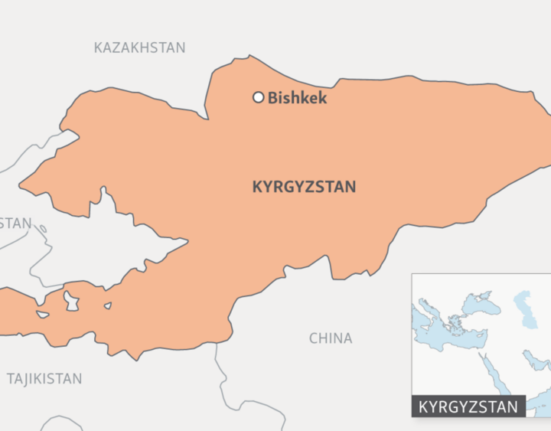
The World Bank Group has released the Country Climate and Development Report (CCDR) for the Kyrgyz Republic providing a comprehensive roadmap toward helping the country reach its socio-economic goals and build economic resilience.
Kyrgyzstan continues to experience more frequent and intense storms and landslides, severe heat waves, and droughts, which present real costs to the country’s economy, particularly to key sectors like agriculture.
According to the report, the cost of policy inaction on addressing these risks could:
Reduce real GDP by 2-3% by 2040 and 2-4% by 205 due to damage to agriculture and infrastructure.
Push an additional 170,000 people into poverty by 2040, with rural areas most affected.
Cause significant job and income losses for households in the bottom 20% of the income distribution.
Result in up to 24% of irrigation demand going unmet by midcentury due to rising temperatures and increased water requirements for crops.
Decrease agricultural productivity, with annual revenue losses of about 5-10%.
Increase the number of people exposed to flooding 24-38%.
Improving the resilience of the Kyrgyz economy is essential for the country’s prosperity, and will require major infrastructure investments and structural reforms, such as improving the business environment, ensuring fair competition (including with state-owned enterprises), maximizing productivity spillovers from foreign direct investment, and deepening integration with regional and global markets.
The report sets out seven policy packages to bolster the country’s resilience:
Strengthen integrated planning and resilience in irrigation and agriculture, including zoning laws, conservation measures, efficient irrigation technologies, resilient pasture management, and improved extension services.
Build resilient transport infrastructure, with vulnerability assessments, upgraded building standards, nature-based solutions, and roads and bridges that can withstand floods.
Advance disaster risk management, including monitoring of natural hazards, smarter master plans, and rapid financing mechanisms for emergencies.
Promote energy efficiency, with cost-reflective tariffs, building renovation programs, economic incentives, and new building codes.
Enhance energy security, with accelerated investments in hydropower and solar generation, expanded transmission systems, and improved energy reliability.
Implement reforms to boost private investment, including streamlined business procedures, sharpened competition, and modernized investment legislation.
Pursue cross-sectoral institutional reforms, including laws that promote resilience and help the country reach emissions targets and integration of resilience into sector policies and strengthened finance systems.
Kyrgyzstan stands to reap considerable benefits from advancing these policies, but it will require major investments. Achieving the country’s goal of net zero emissions by 2050 will require roughly $400 million annually for the next 25 years, primarily in the power, buildings, and transport sectors.
Mobilizing private finance to complement limited public resources will be key. Economic incentives, green bonds, favorable loan conditions, and de-risking instruments can stimulate private investment, while improving the efficiency and effectiveness of investments through better technologies, smarter policies, and stronger institutions may help accommodate the estimated investment needs without significant additional efforts.