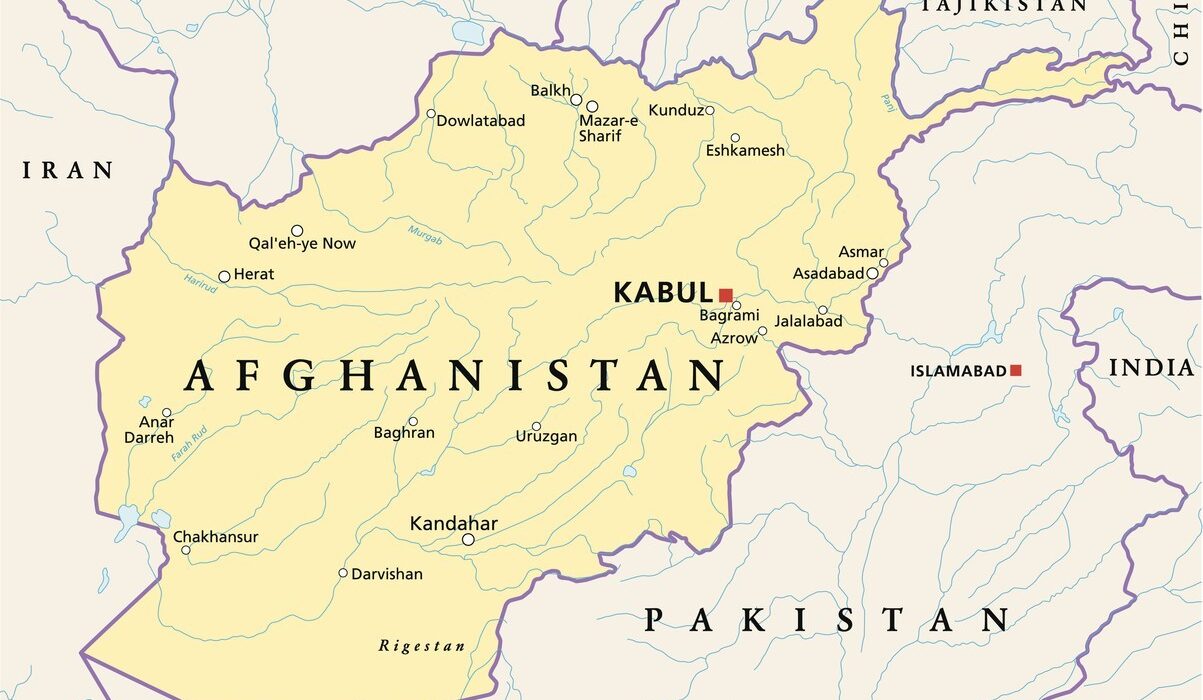
In recent years, investors from the Eurasian region have shown growing interest in Afghanistan with a focus on transport and energy infrastructure, as the country has the potential to become an important link between Central and South Asia.
Afghanistan remains a net importer of investment from Eurasian countries, with the total volume of FDI stock from these countries reaching $190 million in the first half of 2025, according to the Eurasian Development Bank’s report “The Eurasian Region and Partner Countries in Asia: Analysis of Investment Flows Based on EDB Monitoring of Mutual Investments”.
Investors are represented by companies from three Central Asian countries: Kazakhstan, Turkmenistan, and Uzbekistan.
Turkmenistan is a major investor in the Afghan economy, with investments totaling $99 million and accounting for 52% of all investments in Afghanistan from Eurasian countries. Most of the projects are aimed at developing transport infrastructure. The largest ongoing project in Afghanistan is the construction of the Turkmenistan-Afghanistan-Pakistan-India (TAPI) gas pipeline, most of which Turkmenistan intends to finance.
Turkmenistan’s investments in the project on Afghan territory began in 2024 and are estimated to have reached $69 million by mid-2025.
The TAPI gas pipeline will be 1,800 km long and have a design capacity of 33 billion cubic meters of gas per year. In 2010, Turkmenistan, Afghanistan, Pakistan, and India signed an intergovernmental agreement on implementation of the TAPI project. The launch of the project had been postponed several times due to political instability in Afghanistan, disagreements over tariffs between the countries participating in the project, and a lack of financial resources. The estimated cost of the project has also changed over time and has now been reduced from the initial $10 billion to $7 billion. It was initially assumed that 70% of the financing would be provided by external players, including international financial institutions. Of the remaining 30%, Turkmenistan planned to finance 85%. In May 2024, Pakistan’s Oil Minister Musadik Malik announced that Pakistan and Turkmenistan would finance the project independently. In 2019, construction of the Turkmen section of the gas pipeline (214 km) was fully completed. In September 2024, construction of the Afghan section began.
The second most important Turkmen investment project in Afghanistan is the financing by Turkmen Railways (Turkmen Demirýollary) of construction of the Akkina-Andkhoy railway line, which is part of the Lapis Lazuli Corridor. Construction work began in 2019, and the line was commissioned in 2021. The total investment amounted to $30 million. The project has enabled Turkmenistan to increase trade with Afghanistan and attract third-country cargo transit to Afghanistan.
Uzbekistan is another major investor in the Afghan economy. It has three projects underway, with investments totaling $56.5 million as of mid-2025. The key project is development of the Tuti-Maidan gas field. The contract was signed in October 2024 and provides for annual investments of $100 million over 25 years. The Uzbek government is also financing the construction of a madrassa in Mazar-i-Sharif, which began in 2024.
Kazakhstan has so far limited itself to opening a trading house in Herat.
Planned investment projects with Afghanistan include:
• Turkmenistan will continue construction of the Afghan section of the TAPI gas pipeline. At the beginning of 2025, Kazakhstan also announced its readiness to join this project. In addition, in April 2025, a delegation of geologists and engineers from Kazakhstan visited Afghanistan. The specialists inspected deposits in the province of Nuristan and collected 130 kg of ore samples (beryllium, lead, and zinc). Based on the results of the analysis, the parties are considering the possibility of implementing full-scale ore deposit development projects.
• In September 2025, Kazakhstan’s Deputy Minister of Transport Maksat Kaliakparov announced that in 2026–2027, the country would build a 120 km railway line between Torghundi and Herat in Afghanistan and lay fiber optic cable along it. The total investment could reach $500 million.
• In August 2025, Turkmenistan and Afghanistan signed an agreement to expand infrastructure of the Torghundi dry port with an initial investment of $5 million from the Turkmen side.
• Uzbekistan has signed contracts to supply electricity to Afghanistan. There are plans to build two power lines and three substations in Afghanistan at a cost of $250 million. • In October 2025, the Afghan government granted Uzbek companies licenses to conduct geological exploration and hydrocarbon production on its territory.