
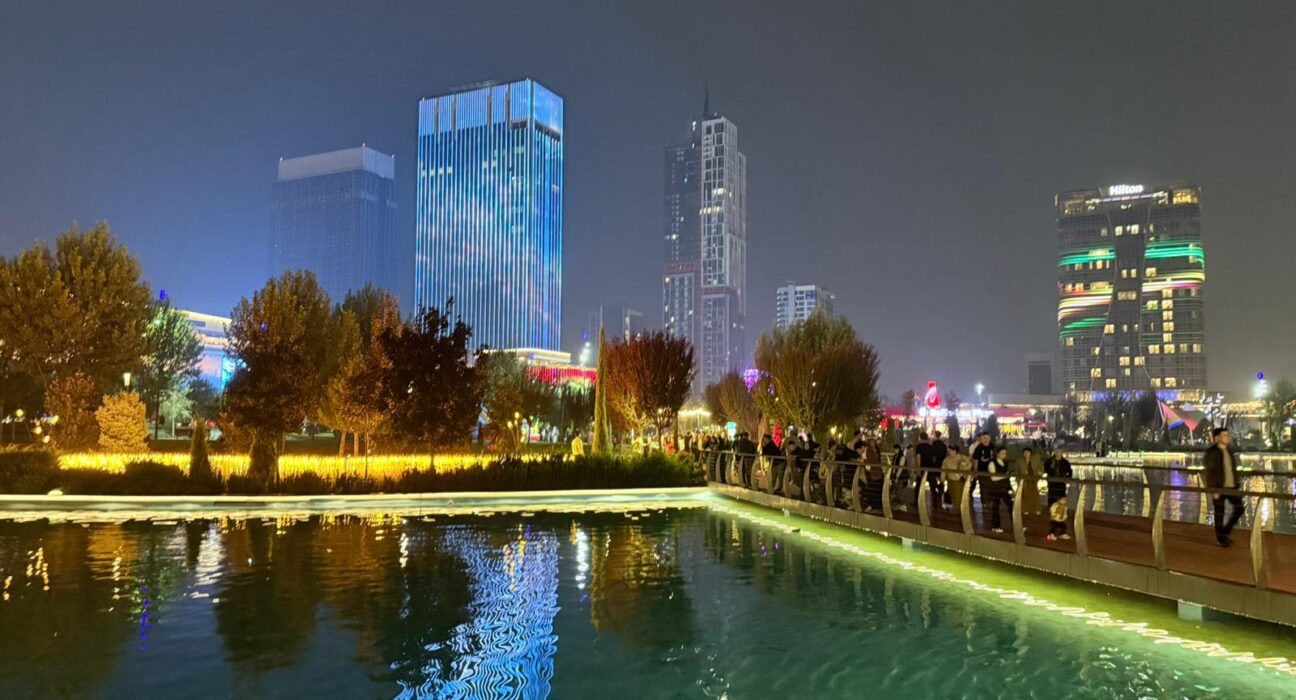
The Institute for Macroeconomic and Regional Studies has presented a comprehensive strategy for the Uzbek capital’s development after sunset. The study emphasizes that without systemic management and infrastructure development, the plan to create 320 round-the-clock streets in Tashkent would not be realistic, Tashkent Today reports.
The main barriers identified are a lack of transportation (the metro and two-thirds of buses close before midnight) and a lack of lighting in the outskirts. Satellite analysis confirmed that high-quality lighting increases the likelihood of businesses operating at night by 54%.
Key recommendations:
• Management: Introduce the position of deputy khokim (mayor) for the night-time economy (“night mayor”).
• Transportation: Launch night buses to Sergeli, Uchtepa, and Yangikhaot; extend metro hours on weekends until 1:00 AM.
• Infrastructure: Install 24-hour restrooms, implement night navigation, and a special waste collection regime.
• Event marketing: Create a public calendar of night festivals, markets, and open-air film screenings.
Implementing these measures will not only allow Tashkent to relieve congestion in the city center’s transportation network but also effectively accommodate the growing tourist flow, creating thousands of new jobs.


