In his Address to the parliament and people of Uzbekistan on December 26, President Shavkat Mirziyoyev identified ensuring environmental balance, advancing green energy, and promoting the sustainable and rational use of water resources as a strategic priority for the nation.
Reducing harmful emissions
According to the President, in order to mitigate the environmental impact of industrial activity, a $100 million credit facility will be made available to large enterprises. These funds will be directed toward the installation of modern filtration systems, treatment facilities, and monitoring stations to control harmful emissions into the atmosphere.
Particular attention is given to greenhouse operations in Tashkent and the Tashkent region, where approximately 2,000 greenhouses are currently heated using coal and gas. It was emphasised that coal-fired boiler houses operating without filtration systems will be gradually phased out. Such facilities will be relocated beyond the capital, while heating will be provided through centralised boiler systems. To support this transition, agricultural clusters covering at least 200 hectares will be established, and targeted subsidies will be offered to greenhouses that choose to join these clusters.
Promotion of environmentally friendly transport
The Address also announced the introduction of an environmental sticker system for motor vehicles. Drawing on international experience, vehicles will be classified according to their emission levels and environmental stickers will be issued accordingly. Access for high-emission vehicles to the capital, regional centres, and cities will be restricted.
State support measures will be provided to owners of such vehicles. In particular, when replacing outdated vehicles, a portion of the interest rate on auto loans will be subsidised. Drivers willing to install emission-reducing filters will also be eligible for subsidies covering part of the associated costs.
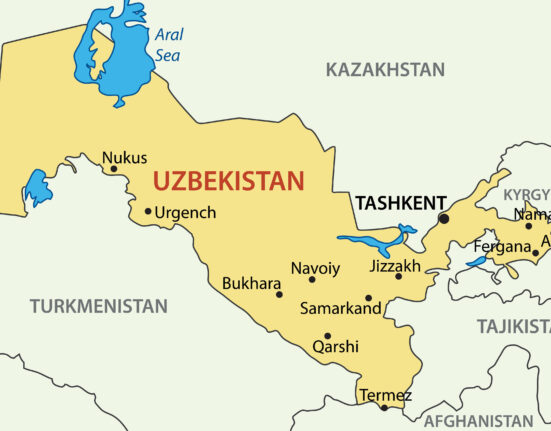
The development of public transport in Tashkent and other major cities has been identified as a key priority. Plans include expanding dedicated lanes for buses and taxis, as well as introducing intelligent traffic management systems based on smart traffic lights in Tashkent, Samarkand, and Namangan.
The Address also focused on encouraging the use of electric vehicles. A five-year program will be implemented to increase the number of environmentally friendly vehicles nationwide. Under this program, auto loans for domestically produced electric vehicles will be offered at an interest rate of 12 percent, while loans for imported electric vehicles will be available at 16 percent. Entrepreneurs establishing charging infrastructure will receive concessional loans at 10 percent and will be granted the opportunity to acquire land plots through auctions at half the market value. Additional incentives will also be provided for citizens offering taxi services using electric vehicles.
Water management
The Head of State also addressed water resource issues, noting that water scarcity is becoming an increasingly pressing global challenge. In 2026, 3.3 trillion soums will be allocated for the implementation of water-saving technologies. Plans include the concreting of 1,300 kilometers of main canals, which will make it possible to save up to 500 million cubic meters of water annually.