An international symposium, titled “The Golden Horde as a Model of Steppe Civilization: History, Archaeology, Culture, and Identity,” took place in Astana last week, bringing together leading Kazakh and international scholars and experts to comprehensively understand the historical legacy of the Golden Horde (the Ulus of Jochi) and its role in shaping civilizational processes in Central Eurasia.
The goal of the symposium was to position Kazakhstan as a leading international center for the study of the Golden Horde’s legacy.
The Golden Horde, also known as the Ulus of Jochi, emerged from the empire created by Genghis Khan across the Eurasian steppe. The Golden Horde traces directly to Jochi, the eldest son of Genghis Khan, whose descendants ruled the Ulus of Jochi across a vast territory from the Irtysh to the Danube. Over time, the Ulus of Jochi was divided between Jochi’s sons into western and eastern wings known respectively as the White Horde (Ak-Orda) and the Blue Horde (Kok-Orda). By mid-15th century, the Ulus of Jochi had fragmented into successor polities, including the Siberian, Uzbek, Kazan, Crimean, and Kazakh khanates.
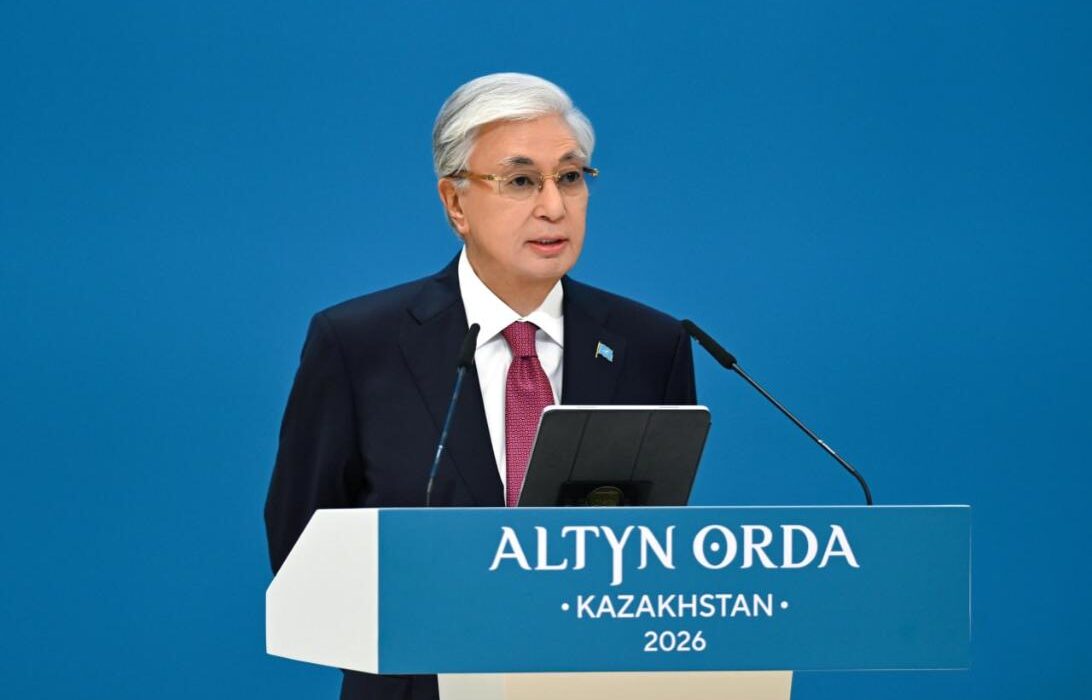
Speaking at the symposium, Kazakh President Kassym-Jomart Tokayev noted the Golden Horde’s special role in world history.
“Today, no historian questions the power of the Golden Horde—an empire that ruled the Great Steppe and occupied the vast expanses of Eurasia. This is a historical fact. This empire, which connected West and East and significantly influenced the development of various civilizations and the formation of states, was a major political structure, which is also irrefutable. This is precisely why the history of the Golden Horde is the subject of numerous in-depth studies. This topic remains relevant today, and, in my opinion, will never lose its significance. This is one of the most important pages in the annals of our country and all of humanity,” the President noted.
Tokayev emphasized the importance of preserving historical continuity. “The new Constitution, adopted by a national referendum, clearly states that preserving the continuity of the Great Steppe with its thousand-year history is our sacred duty,” he said, adding that “our country is the direct heir to the Golden Horde”.
Tokayev was echoed by Kazakhstan’s Minister of Science and Higher Education, Sayasat Nurbek, who stated that the international symposium dedicated to the legacy of the Golden Horde is of strategic importance for the development of historical scholarship and a rethinking of the historical past.
“Today we are discussing not only the past, but also the foundation for understanding statehood, identity, and Kazakhstan’s place in Eurasian history. In the context of today’s rethinking of history, the Golden Horde is particularly significant as a crucial stage in the formation of the political and cultural traditions of the Great Steppe,” the minister emphasized. According to him, the Golden Horde represented a unique model of Eurasian integration, enabling interaction between East and West, the exchange of ideas, technologies, and cultural practices, and its history reflects the synthesis of steppe and sedentary civilizations.
“For Kazakhstan, studying the Golden Horde is not just an academic task. It is a question of historical continuity. Kazakhstan considers itself one of the heirs of the Ulus of Jochi, where the foundations of statehood and ethnogenesis were formed, continued in the Kazakh Khanate,” said Sayasat Nurbek.
Photo: akorda.kz