
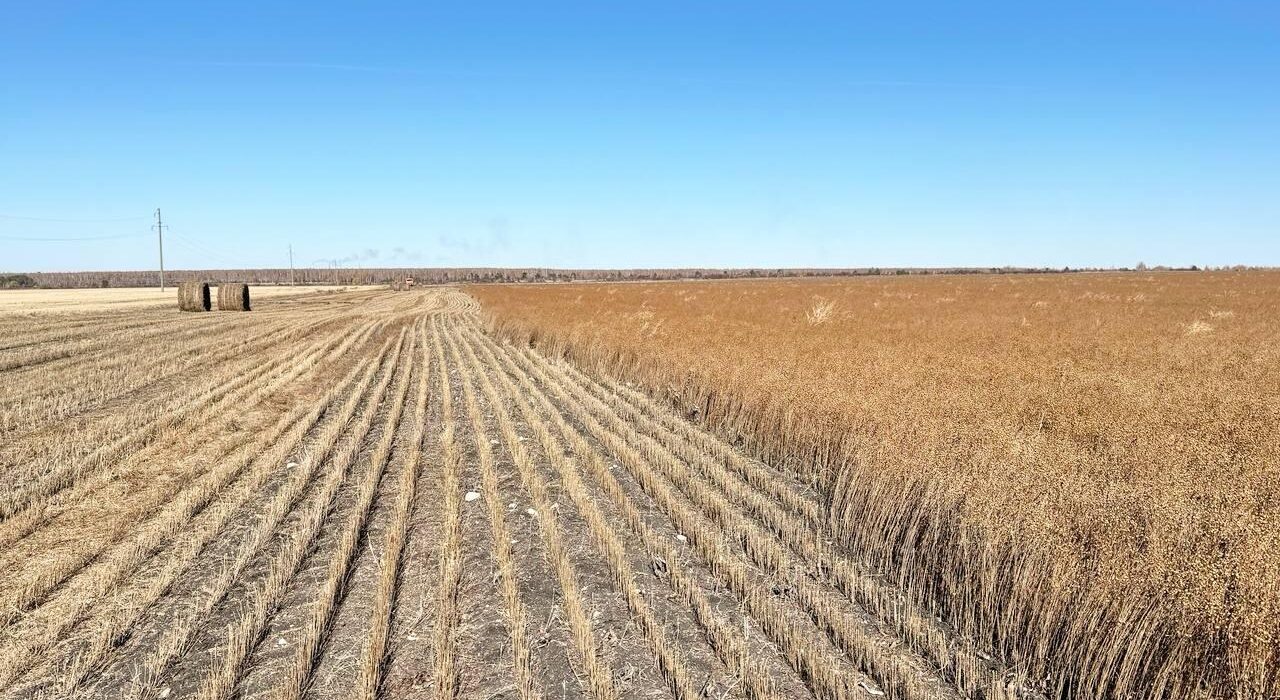
This year Kazakhstan will continue diversifying its agricultural crop areas to reduce its reliance on wheat monoculture and expand the area under highly profitable crops for processing into products with higher added value.
At a government meeting on January 13, Deputy Minister of Agriculture Azat Sultanov announced that in 2026, the total area under crops across Kazakhstan will be 23.8 million hectares, an increase of 180,000 hectares compared to 2025.
As part of the crop diversification program, grain crops will be reduced to 15.9 million hectares, 112,400 hectares less than the previous year, primarily due to a decrease in the area under wheat to 12.1 million hectares from last year’s 12.2 million hectares.
At the same time, the country will expand the area under highly profitable crops required for further processing. Oilseed crops will be expanded by 55,200 hectares to 4.045 million hectares, barley — by 93,800 hectares to 2.4 million hectares, corn — by 42,900 hectares to 217,500 hectares, and fodder crops — by 37,400 hectares to 3.1 million hectares.
According to Sultanov, much more corn is required for processing at the new deep corn processing facility built by China’s Fufeng Group in Kazakhstan’s Zhambyl region. With the planned launch of the first phase, the new plant will require 500,000–700,000 tons of corn for processing, with plans to increase to 1 million tons. The area under fodder crops is expanding in connection with the launch this year of a national program for livestock farming development.
Kazakhstan also plans to reduce the area under water-intensive crops such as rice and cotton in favor of less water-demanding crops. This is particularly relevant for the arid, southern regions of Kazakhstan—Kyzylorda, Turkestan, and Zhambyl, which rely heavily on irrigation water from upstream Kyrgyzstan and Uzbekistan. The Ministry of Agriculture recommends farmers to reduce the area under rice by 8,500 hectares in the Kyzylorda region and by 7,400 hectares in the Turkestan region.
With projected area under cotton this year at 148,500 hectares, areas under drip irrigation will expand by 15,000 hectares, while cotton areas using traditional irrigation methods will be reduced by 11,000 hectares.
Photo: gov.kz