
Based on recent economic consensus from institutions like the International Monetary Fund (IMF), the European Central Bank (ECB), and the World Economic Forum (WEF) as of early 2026, globalization is not entirely “over,” but it is undergoing a profound structural shift.
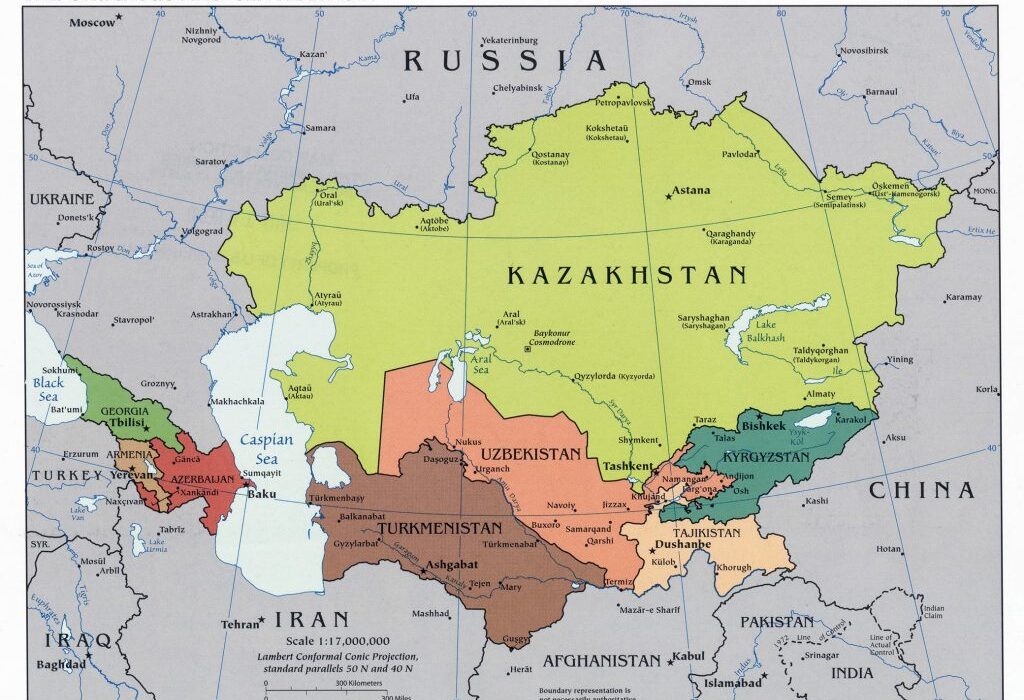
Economists generally agree that the era of hyperglobalization has stagnated—a trend accelerated by the COVID-19 pandemic, geopolitical conflicts, and an increase in protectionist policies. Rather than a complete collapse of global trade, the world is experiencing what policymakers call “geoeconomic fragmentation” or targeted deglobalization. This trend will prove very challenging to Central Asian nations who benefited from globalization.
In this new paradigm, global interconnectedness is being redrawn along political and strategic lines. Countries and multinational companies are actively shifting away from a pure efficiency model toward resilience, relying on strategies like “friend-shoring” (moving production to politically aligned nations) and localized supply chains. Central Asian supply chains were already heavily reliant on Russia due to the legacy of the Soviet Union and increasingly becoming part of China’s BRI. To a lesser extent, they are diversifying into the BRICS economies as well.
Globalisation had significant benefits for Central Asia. Multi-Vector diplomacy sought to attract interest from various trade blocs across the world. Kazakhstan maintained good relations with Europe, the US, and BRICS. For example, the Middle Corridor kept trade relations with Turkey and Europe while avoiding Russian sanctions. Trade routes into China are working at maximum. New connectivity South is increasing, even to Afghanistan. However, if trade, capital flows, and banking regulation, start to fragment along trade bloc and political lines, Central Asia will be negatively affected. Central Asia will be under increasing pressure to choose sides.
If this trajectory of geoeconomic fragmentation continues, it will have profound, long-term effects on global financial policy:
- Structural Inflation and Tighter Monetary Policy
For decades, globalization had a deflationary effect by allowing companies to source the cheapest labor and materials globally (the “globalization of inflation”). Geoeconomic fragmentation reverses this. Increased tariffs, the duplication of supply chains, and a “home bias” toward domestic products raise production costs.
• Policy Effect: Central banks will likely have to navigate structurally higher and more persistent inflation. This means monetary policymakers may be forced to maintain tighter interest rate environments over the long term, limiting their ability to use low interest rates to stimulate growth without triggering runaway inflation.
2. Shift Toward Domestic Capital Markets and State Intervention
Deglobalization is characterized by a reduction in cross-border foreign direct investment (FDI) and a withdrawal of capital to “trusted” jurisdictions. Early 2026 economic analyses indicate that this will prompt a refocusing of financial operations onto local capital markets.
• Policy Effect: Financial policy will see a resurgence of state intervention and industrial policy. Governments are increasingly utilizing subsidies and tax policies to protect domestic industries. Policymakers will need to design frameworks that support local capital generation and domestic pension fund investments, as access to external global financing may become more restricted.
• Cental Asian nations have taken steps to develop their own domestic capital markets, such as the AIFC financial centre. This will give them the ability to mitigate capital flight and attract investment.
3. Changes in Financial Stability and Shock Transmission
In a highly globalized world, domestic economic shocks are often buffered by foreign demand, even though global shocks (like the 2008 financial crisis) spread rapidly.
• Policy Effect: As global financial integration decreases, economies will become less exposed to foreign shocks but significantly more vulnerable to domestic ones. The ECB has noted that this reduced economic synchronization can actually amplify financial stress during crises. Financial regulators will need to mandate higher domestic capital buffers for banks and financial institutions, as they will not be able to rely as heavily on international liquidity in times of crisis.
• Central Asian nations’ financial integration will inevitably rely more on China as the only nation providing real financial stability to the region. Trade deals are inevitably going to rely on the Yuan.
4. Fragmentation of International Financial Regulation
The seamless global financial system relies on a high degree of regulatory cooperation. However, as the global economy splinters into competing blocs, there is a rising risk that the global financial system will be used as a tool for “geoeconomic statecraft” (such as financial sanctions and investment restrictions).
• Policy Effect: While core technocratic regulations (like Basel banking standards) may remain largely intact, there will likely be a “bipolarization” of broader financial standards. Financial policymakers will have to navigate a complex web of competing regional regulations, compliance requirements, and parallel financial infrastructures (e.g., alternatives to the SWIFT payment system) designed to insulate domestic economies from foreign interference.
• The technical international regulations are likely to remain the same in Central Asia, though intervention to maintain stability is likely to rely more on regional institutions, China, and BRICS.
In summary: Globalization is transitioning into geoeconomic fragmentation. For financial policy, this marks a long-term pivot away from maximizing global market efficiency toward prioritizing national security, supply chain resilience, and domestic financial stability. Policymakers will have to manage this transition while grappling with the heavy macroeconomic costs of fragmentation, which the WEF estimates could cost the global economy up to 5% of its output. Central Asian nations are increasingly likely to be drawn into arrangements with Chinese, regional, and BRICS nations.
By Bruce Gaston