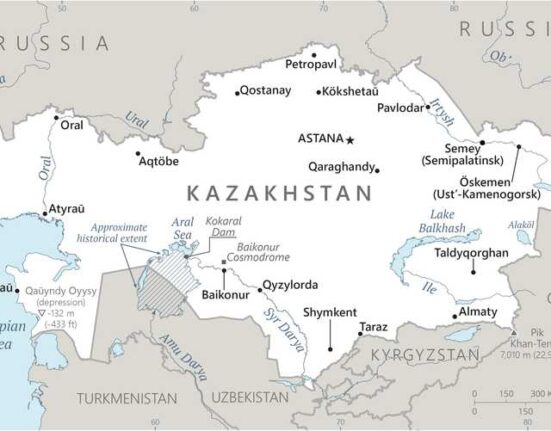
The Aral Sea region faces a complex combination of interconnected challenges, including environmental degradation, water scarcity, declining agricultural productivity, limited access to essential services, and heightened vulnerability to climate change. In response to these challenges, the United Nations Development Programme (UNDP), jointly with the Ministry of Agriculture of Uzbekistan and the Council of Ministers of Karakalpakstan, is implementing the project “Enhancing the Resilience of Local Communities and Promoting Green and Inclusive Development in the Most Vulnerable Communities of the Aral Sea Region” with financial support from the Government of Russia. The project applies an integrated, multi-sectoral approach that simultaneously addresses food security, water access, climate adaptation, job creation, and economic inclusion for vulnerable groups, UNDP Uzbekistan reported.
One of the project’s key priorities is the development of greenhouse farming to strengthen food security, support climate adaptation under conditions of water scarcity, and generate income for smallholder farmers. More than ten energy-efficient greenhouses equipped with water-saving irrigation systems have already been installed across pilot districts.
Alongside greenhouse farming, the project is introducing water-saving technologies in open-field agriculture. In Karauzyak district, a portable sprinkler irrigation system was installed on 13.6 hectares of land in an area with limited irrigation access. The technology reduced water consumption by 50 percent while increasing crop yields by 20 percent.
Improving access to safe drinking water is another critical dimension of the project’s work. A desalination station in the rural settlement of Kuralpa, Karauzyak district, where outdated infrastructure from the 1990s could no longer meet the needs of the growing community, has been reconstructed. The project supported the full modernization of the station, including the installation of new purification equipment with a capacity of 16 cubic meters per hour and the construction of 11.8 kilometres of water pipelines. As a result, 1,520 residents now have access to safe drinking water that meets sanitary standards.
Livestock production also plays a vital role in local food systems and rural incomes across Karakalpakstan. To support sustainable productivity growth, the project partnered with the Institute of Veterinary Medicine to introduce science-based cattle feeding practices and provide fodder production equipment to the Aryslan Sharua farm in Kegeyli district. These measures increased livestock productivity by 40 percent. At the same time, the project is supporting the restoration of eight hectares of degraded pastureland using methodologies developed by the Federal Scientific Centre of Agroecology of the Russian Federation.
The project is also helping expand rural entrepreneurship and local agro-processing. The project demonstrates how strategic partnerships can deliver practical solutions to the interconnected environmental and socio-economic challenges facing the Aral Sea region. Through climate-smart agriculture, improved water access, and support for sustainable livelihoods, the initiative is contributing to the achievement of the Sustainable Development Goals and helping build a more resilient future for local communities.