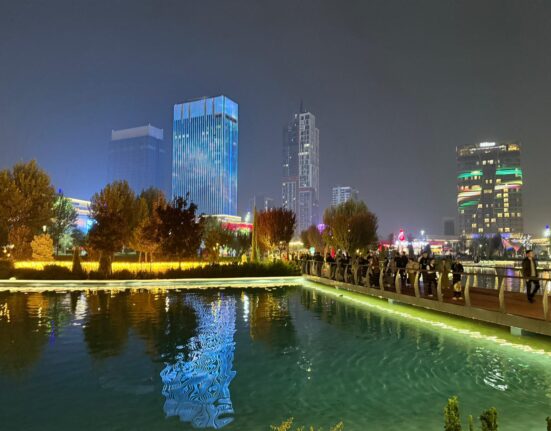

Bekhzod Khashimov, an economist and researcher at the University of Wisconsin, analyzed the current state of Tashkent’s urban environment. He’s come to the conclusion that despite high-quality private services in the Uzbek capital, public services remain in a critical state, Tashkent Today reported.
The expert points to the following infrastructure issues:
• Inaccessible environment: sidewalks are too narrow or end at the roadway. Ramps and underpasses are unsuitable for strollers.
• Traffic and traffic lights: the green light cycle is too short even for physically fit people. The average time in traffic jams is 1 hour per 9 km.
• Garbage crisis: trash bins in the city center are overflowing, and in mahallas (residential neighborhoods), waste collection schedules are systematically violated, leading to illegal dumping.
• Public spaces: parks are overcrowded with commercial buildings and concrete (“shopping mall philosophy”), while fences remain in place everywhere.
• Transportation: critical metro congestion due to a shortage of trains and the lack of a paid parking system for cars.
The expert emphasizes that the private sector in Uzbekistan has reached world-class standards, while public management of the urban environment requires a radical overhaul of approaches to tax distribution and the responsibility of officials.